
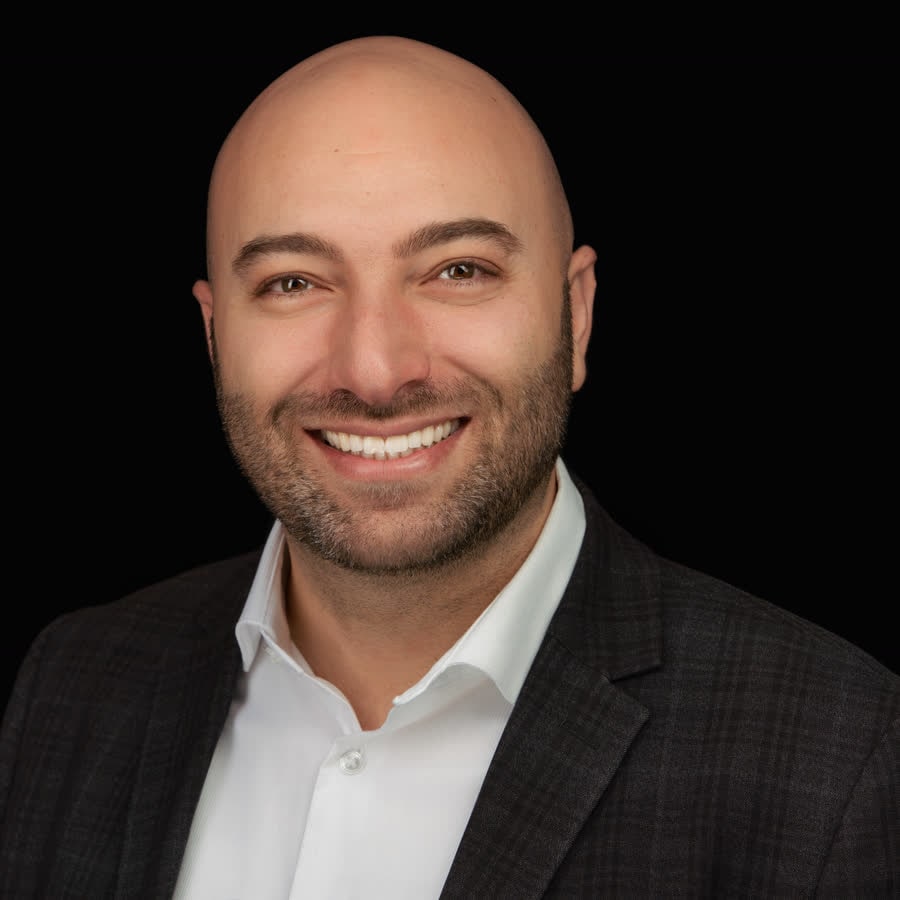
Nine times out of ten, the first question I get after someone books is what they should wear. And nine times out of ten there's already a shopping bag involved. Sometimes a brand-new blazer with the tag still on, bought that week.
Put the bag down. Here's what matters.
Wear something you already own
Clothes you've never worn before do a specific thing to a person. You adjust the collar. You're aware of the sleeves. You sit like someone wearing a costume, because you are.
A camera picks all of that up, and it reads as discomfort rather than style. The best frames I take are almost always of people in a jacket they've worn to a hundred meetings.
Simple test: if you'd feel confident walking into a client meeting in it, it will photograph well.
Bring options, not an outfit
Two or three tops is plenty. Not because we'll use them all, but because seeing yourself on screen changes your mind about what you like, and we review the images together as we shoot. You'll know within four minutes which one is working.
A good spread looks like:
• One solid mid-tone: navy, charcoal, deep green, burgundy
• One layer, even if you never button it
• One thing that feels more like you than like your job title
The layer earns its place. Structure across the shoulders gives a portrait shape, and shape is most of what separates a deliberate headshot from a snapped one.
Four things that fight the camera
I'm not precious about clothing rules, but these cause real problems.
Tight repeating patterns. Fine checks, thin stripes, herringbone. They can shimmer and buzz against a digital sensor. A bold pattern is fine; a tiny busy one is a gamble.
Brilliant white on its own. It becomes the brightest thing in the frame and your face has to compete with it. Under a layer, it's perfect.
Logos. Nothing wrong with them, but they date a photo faster than anything else. Rebrand, new sponsor, changed roles, and the headshot needs redoing.
Anything you have to manage. A neckline you keep adjusting, a collar that won't sit, a necklace that spins. You'll think about it all session, and thinking about it shows in your eyes.
Colour, briefly
Mid-tones are the safe bet, and darker colours below the face pull attention upward where you want it.
Past that, wear a colour you like. People who like what they're wearing look like it, and looking like it is the product.
If your company has brand colours and you'll sit on a team page, give it a thought. Just never at the cost of wearing something that makes you feel like a stranger.
The unglamorous details
Iron it, or bring it on a hanger. A crease across the chest is the most common thing I retouch and the most avoidable.
Get a haircut a few days out, not the day before. Give it time to settle into looking like your hair.
Wear your glasses. If you wear them every day, a photo without them doesn't look like you. Reflections are a lighting problem, and lighting is my job. Non-reflective lenses help if your optician can sort them quickly, but don't lose sleep over it.
Bring a lint roller, or trust that I have one. I have one.
Organising a team?
Don't mandate an outfit. Give a range instead — "business casual, mid-to-dark solids, layers welcome" — and let people choose inside it.
A team gallery hangs together because the lighting, framing and background are identical, not because everyone wore the same shirt. That part is on me. Letting your people look like themselves is what stops the page reading like a uniform catalogue.
One last thing
Clothing is maybe twenty percent of a headshot. Expression is most of the rest, and you don't have to arrive with it — we build it during the session.
You won't be stood in front of a light and told to look natural, which is the least natural instruction in English. We work through it, you see the frames as we go, and you pick the ones you like at the end.
So: two or three things you already like wearing. That's the brief.
Still stuck the night before? Send me a photo of the options and I'll tell you which to bring.